
 Most of us in the marketing business are familiar with the concept of – if not necessarily the term – pull marketing. Pull marketing refers to using your business development strategies to attract customers actively seeking out a product or service to your particular offering. For example, a pizza company might work on increasing its page ranking through search engine optimization (SEO) so that it shows up prominently when a hungry potential customer searches for “pizza near me” in their search engine.
But there’s another type of marketing that takes a more aggressive approach. “On the other side of the coin is a push campaign,” writes Rocco Baldassarre – Founder & CEO of Zebra Advertisement 1DollarAd.com – In an article for Entrepreneur. “A push campaign presents products and services to an audience without serving an initial demand.”
Baldassarre writes about push marketing in the context of online marketing and offers four tips for maximizing the outcome of your efforts. Continue reading “Using Push Marketing Techniques to Grow Your Business”
 Most small business owners are heavily focused on their core skillset. They are bakers, event planners, lawyers – insert job – first, and accountants and marketers second.
  “Dilly, dilly!” It was the
  People may sometimes think about marketing as the process of convincing someone to buy something they may not be initially inclined to purchase. Maybe it’s luring a customer away from a competitor or convincing someone to buy something they don’t really need.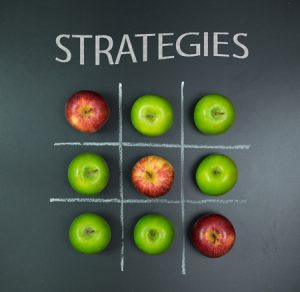
 The word “sales” often conjures up some very specific images. A man in a suit holding a briefcase going door-to-door selling encyclopedias or vacuums, for example. Or a guy hustling in a car lot. But as we know, sales is, in reality, a process. A process that ends with a pitch. The direct pitch to the customer or the final sales touchpoint is the last step in the sales process and is often referred to as “the bottom of the funnel” (BOFU). It follows TOFU (top of the funnel) and MOFU (middle of the funnel) activities that are designed to move the consumer down a pathway to a purchase.
  To a large extent, the sales and marketing world can be divided along two broad lines: business-to-business (B2B) versus business-to-consumer (B2C) and products versus services. Sales strategies for B2C services will differ from B2B services, which differ from B2B products, etc. There are best practices and pitfalls for each quadrant of possible scenarios created by this way of looking at sales and marketing.
  The value proposition for a product or service is a foundational element in any sales and marketing activity. The value proposition responds to consumers’ question of “why” related to your products and services. “Why should I buy your product?” “Why should I subscribe to this service?”
 Millennials have changed the face of the world in so many ways: culture, technology and business to name just a few. As this group grows to represent an ever-larger share of the consumer market, one characteristic of this cohort, in particular, can be extremely vexing for marketing professionals: they—even more than previous generations—dislike and distrust marketing and advertising. So what can you do about that?